Capitol Confrontation: Ocasio-Cortez and Kennedy Spark Rhetorical Firestorm in Senate
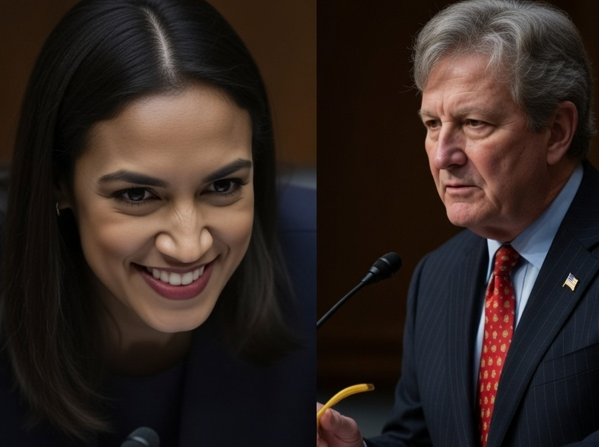
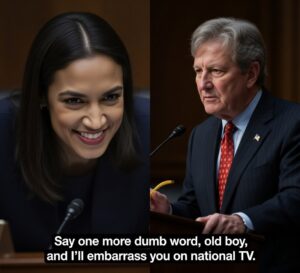
The United States Senate chamber became the stage for a highly charged verbal confrontation between Representative Alexandria Ocasio-Cortez and Senator John Kennedy, transforming routine legislative debate into an electrifying spectacle. Ocasio-Cortez, known for her assertive progressive stance, issued a sharp warning to Kennedy, threatening to “embarrass” him on national television for what she deemed “dumb words.” Her voice, cutting through the air, brought immediate silence, signaling an abrupt shift from policy discussion to personal confrontation.
Unfazed, Senator Kennedy of Louisiana, recognized for his measured cadence and dry wit, remained composed. He deliberately rose, locking eyes with Ocasio-Cortez, and approached the microphone with unhurried confidence. His retort, “You want embarrassment? Try surviving this,” detonated a mixture of audible gasps, scattered laughter, and stunned silence among lawmakers. Witnesses described the moment as “cinematic,” a rhetorical standoff that captured the chamber’s attention. Kennedy’s response reportedly targeted perceived inconsistencies in Ocasio-Cortez’s policy positions with pointed sarcasm, further fueling the drama.
Beyond the immediate rivalry, the clash underscored deep ideological and generational divisions permeating Congress. Supporters of Ocasio-Cortez lauded her willingness to confront dismissive rhetoric from senior lawmakers, aligning with her brand as a vocal advocate for progressive change on issues like climate policy and economic inequality. Conversely, Kennedy’s allies praised his calm rebuttal, seeing it as seasoned resilience under pressure from younger progressive voices, reinforcing his reputation as an experienced debater who employs sharp humor against fiscally irresponsible proposals. This dynamic quickly circulated across social media.
Political commentators swiftly framed the episode as emblematic of a broader shift towards performative politics in the age of instant digital dissemination, where intense exchanges risk overshadowing substantive policy discussions affecting millions. This incident is part of an escalating pattern of rhetoric in legislative chambers nationwide, fueled by partisan polarization and heightened media scrutiny. Such high-profile confrontations can strategically serve as rallying points ahead of election cycles, solidifying support bases and hardening opposition among critics.
Despite sharp words and palpable tension, procedural business in the Senate chamber resumed shortly afterward, demonstrating institutional continuity. The atmosphere remained charged, however, with lingering whispers and sidelong glances. While aides downplayed the exchange as robust debate inherent to democratic governance, the vivid imagery and rapid dissemination captured public imagination. This incident vividly illustrates how rhetoric shapes perception as powerfully as policy outcomes, acting as a potent reminder of the stakes and spectacle embedded in contemporary American politics, and foreshadowing potentially more frequent dramatic clashes.