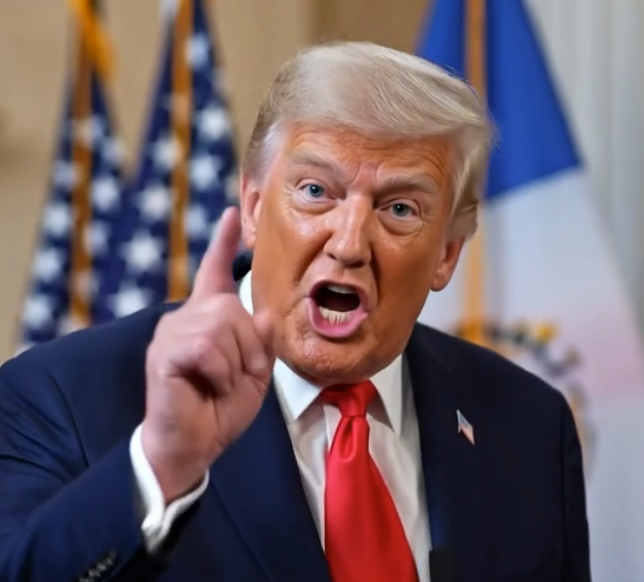
President Donald Trump on Friday suggested that Ted Cruz could be considered for a future vacancy on the Supreme Court of the United States, despite the Texas Republican previously indicating he has little interest in serving on the nation’s highest court.
Speaking at a rally in Corpus Christi, Trump praised Cruz as “an amazing guy” and joked that lawmakers from both major political parties might enthusiastically support his confirmation. The former president suggested, humorously, that Democrats and Republicans could unite behind the nomination largely because it would remove Cruz from the Senate.
“He’s the only guy I know who would get 100 percent of the Democrat vote and 100 percent of the Republican vote,” Trump told the crowd. “They want to get him out of there. He is such a pain in the ass, but he’s so good and so talented,” he added, drawing laughter from supporters.
Cruz, who has represented Texas in the U.S. Senate since 2013, addressed speculation about a possible Supreme Court appointment during a public appearance last month. At that time, he indicated he was not interested in leaving the Senate for a position on the court, emphasizing his desire to continue his legislative work.
Trump’s comments came during a week marked by significant legal and economic developments tied to his administration’s trade agenda. Earlier in the week, the Supreme Court issued a 6–3 ruling striking down the administration’s use of the International Emergency Economic Powers Act to impose global tariffs. The majority concluded that the statute did not authorize the sweeping tariff policy implemented by the administration.
In response to the decision, Trump announced a new 10 percent global tariff from the Oval Office just hours after the ruling, stating that the policy would instead rely on a different legal authority.
The court’s decision and the administration’s swift response prompted reactions from lawmakers, including John Kennedy. Appearing on the television program Fox & Friends Weekend, Kennedy argued that the political impact of the ruling could ultimately be limited.
Kennedy noted that the federal government had already collected significant revenue through tariffs imposed during Trump’s presidency, estimating the total at roughly $300 billion, with several trade agreements already finalized under the broader policy framework.
“My Democratic colleagues should be careful what they ask for,” Kennedy said, suggesting that if the administration were to return tariff revenues to American businesses, the move could stimulate economic activity ahead of upcoming midterm elections.
According to government data, tariff collections reached $30.4 billion in January alone—an increase of approximately 275 percent compared with January 2025. Kennedy emphasized that the Supreme Court’s ruling addressed the specific legal authority used to impose the tariffs, rather than the broader policy of tariffs itself.