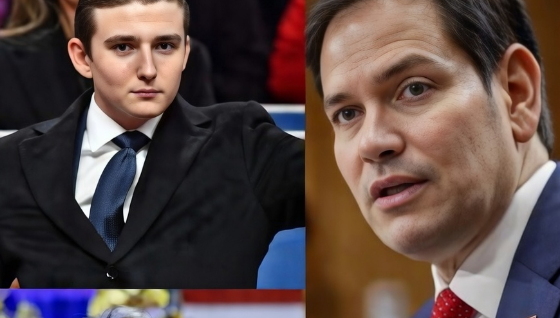
In a moment that dramatically disrupted the rhythm of live political broadcasting, Senator Marco Rubio delivered a brief but powerful statement that instantly transformed the tone of the program. Holding a slim folder, Rubio calmly declared, “We have verified this,” a phrase that quickly reverberated throughout the studio and beyond. The understated delivery carried enormous weight. Producers paused, anchors exchanged uneasy glances, and the atmosphere shifted as the significance of the remark became clear.
Rubio emphasized that the material in the folder had been carefully vetted through multiple layers of verification, including cross-checking sources and authentication through independent channels. In an era frequently marked by misinformation and manipulated media, his assertion of “verified evidence” immediately captured public attention and ignited intense discussion. The comment appeared to challenge not only the individuals involved but also the broader issue of credibility in modern political discourse.
Behind the scenes, the response was immediate. Control rooms reportedly filled with hurried conversations as network executives considered the potential legal and political implications of the disclosure. According to reports circulating online, aides connected to Barron Trump were caught off guard by the moment. The situation intensified when a backstage microphone inadvertently captured what was described as a frustrated outburst believed to be Barron’s voice. The unexpected audio leak quickly circulated on social media, where clips of the moment gained millions of views within hours.
Public reaction divided sharply. Supporters of Barron argued that Rubio’s move amounted to a calculated ambush designed to embarrass a young public figure during a live broadcast. Critics, however, defended the disclosure as a matter of transparency, arguing that claims of verified evidence deserve public attention, particularly when they involve individuals connected to political power.
As the clip spread across platforms such as X and TikTok, the phrase “We have verified this” evolved into a viral slogan—quoted, analyzed, and parodied across the internet. Political commentators noted that Rubio’s composed demeanor contrasted sharply with the emotional reaction captured backstage, reinforcing the dramatic tension of the moment.
The controversy deepened as speculation grew about the documents themselves. Some insiders suggested the material had circulated quietly in political circles for weeks before appearing on television. If accurate, that timeline raised new questions about why the information was revealed publicly at that specific moment.
In the days following the broadcast, Rubio’s team released a statement reaffirming the integrity of their verification process. Representatives for Barron Trump responded with a strong denial and promised a detailed rebuttal. As both sides prepared further responses, the incident continued to dominate political conversation, illustrating how a single unscripted moment on live television can rapidly reshape narratives and ignite nationwide debate.