The U.S. Supreme Court has agreed to hear a Republican-backed challenge to a federal campaign finance law that limits how much political parties may spend in coordination with candidates, setting the stage for a potentially significant ruling on the scope of First Amendment protections in elections.
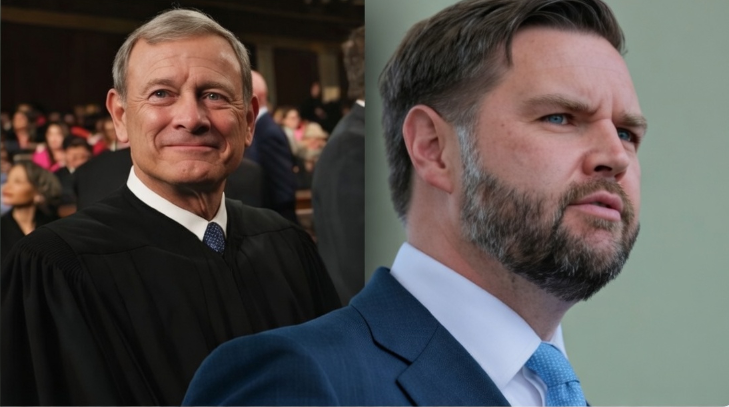
The case involves Vice President JD Vance, who was a Republican candidate for the U.S. Senate in Ohio when the lawsuit was first filed. The justices agreed to review an appeal brought by Vance along with two Republican political committees after a lower court upheld the spending restrictions.
The plaintiffs argue that the limits on coordinated expenditures violate constitutional free speech rights by restricting how political parties support and advocate for their own candidates. They contend that the caps prevent parties from fully collaborating with candidates on campaign messaging and strategy.
The dispute arises in the broader context of the Supreme Court’s landmark 2010 decision in Citizens United v. Federal Election Commission, which struck down restrictions on independent political spending by corporations and outside groups. That ruling determined such limits violated the First Amendment’s protection of political speech.
While Citizens United opened the door to unlimited independent expenditures, the legality of coordinated spending between political parties and candidates remains contested. The current case focuses specifically on whether federal law can cap expenditures made jointly by parties and candidates.
The Trump administration filed a legal brief supporting Vance and the Republican committees, urging the Court to take up the case. The Justice Department also requested that an independent party be appointed to defend the lower court’s ruling because the department no longer supports the existing limits.
The legal framework at issue stems from the Federal Election Campaign Act of 1971 and subsequent amendments, which regulate campaign fundraising and spending in federal elections. The law imposes limits intended to prevent corruption or undue influence in political campaigns.
Under current rules, political party spending conducted independently of a candidate—known as independent expenditures—is not subject to spending caps. However, expenditures coordinated directly with candidates are restricted and vary based on the population of the state involved.
For the 2024 election cycle, those limits ranged from approximately $123,000 to $3.7 million for Senate races and about $62,000 to $123,000 for House contests.
In 2024, the U.S. Court of Appeals for the Sixth Circuit upheld the constitutionality of those restrictions, relying on a 2001 Supreme Court precedent involving a Colorado case that affirmed similar limits.
The plaintiffs have asked the Supreme Court to revisit and overturn that precedent, arguing that developments in campaign finance law and changes in the Court’s First Amendment jurisprudence have undermined the earlier decision. The Court also approved requests from three Democratic campaign committees to intervene in defense of the lower court’s ruling.