A wave of political discussion recently swept through Washington following an unexpected leadership change within the administration of former President Donald Trump. What initially appeared to be a routine Cabinet adjustment quickly drew broader attention as additional details emerged about the transition. The shift involved the Department of Homeland Security (DHS), one of the federal government’s most prominent agencies responsible for overseeing national security, immigration enforcement, and border policy. As the news circulated through political circles and media outlets, observers began questioning the circumstances that led to the change.
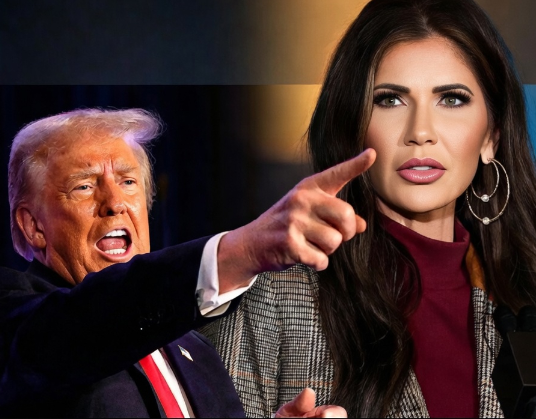
The announcement came when Trump revealed that Homeland Security Secretary Kristi Noem would step down from her position. In a message posted on his social media platform, the president expressed appreciation for Noem’s service and credited her with helping advance several of the administration’s key security priorities during her tenure. Trump also confirmed that Oklahoma Senator Markwayne Mullin would assume the role of Secretary of Homeland Security beginning March 31, 2026. In the same statement, he noted that Noem would transition into a new position as Special Envoy for a regional security initiative known as “The Shield of the Americas,” a program intended to strengthen cooperation and stability across the Western Hemisphere.
Much of the announcement focused on the incoming department leader. Trump praised Mullin’s years of experience in Congress and described him as a dedicated advocate for the administration’s policy agenda. He also highlighted Mullin’s distinctive background prior to entering politics, which included a career as a professional mixed martial arts competitor. According to Trump, those experiences helped shape Mullin’s approach to leadership and contributed to his appeal among voters. The president expressed confidence that Mullin would prioritize issues such as border security, efforts to combat drug trafficking, and broader initiatives aimed at enhancing national safety.
However, subsequent media reports suggested that the leadership transition may have followed months of internal tensions within the department. Several outlets indicated that disagreements over management decisions and policy challenges had created pressure behind the scenes. Some reports also pointed to moments during recent congressional hearings that attracted scrutiny from lawmakers and the public. While the precise reasons for the leadership change remain unclear, the episode highlights how quickly political dynamics in Washington can shift and how leadership transitions can shape the ongoing debate over national security policy and the future direction of the Department of Homeland Security.