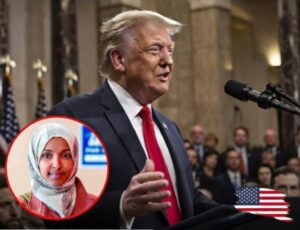
Rhetoric Under Fire: Trump’s Deportation Call for Ilhan Omar Sparks Controversy
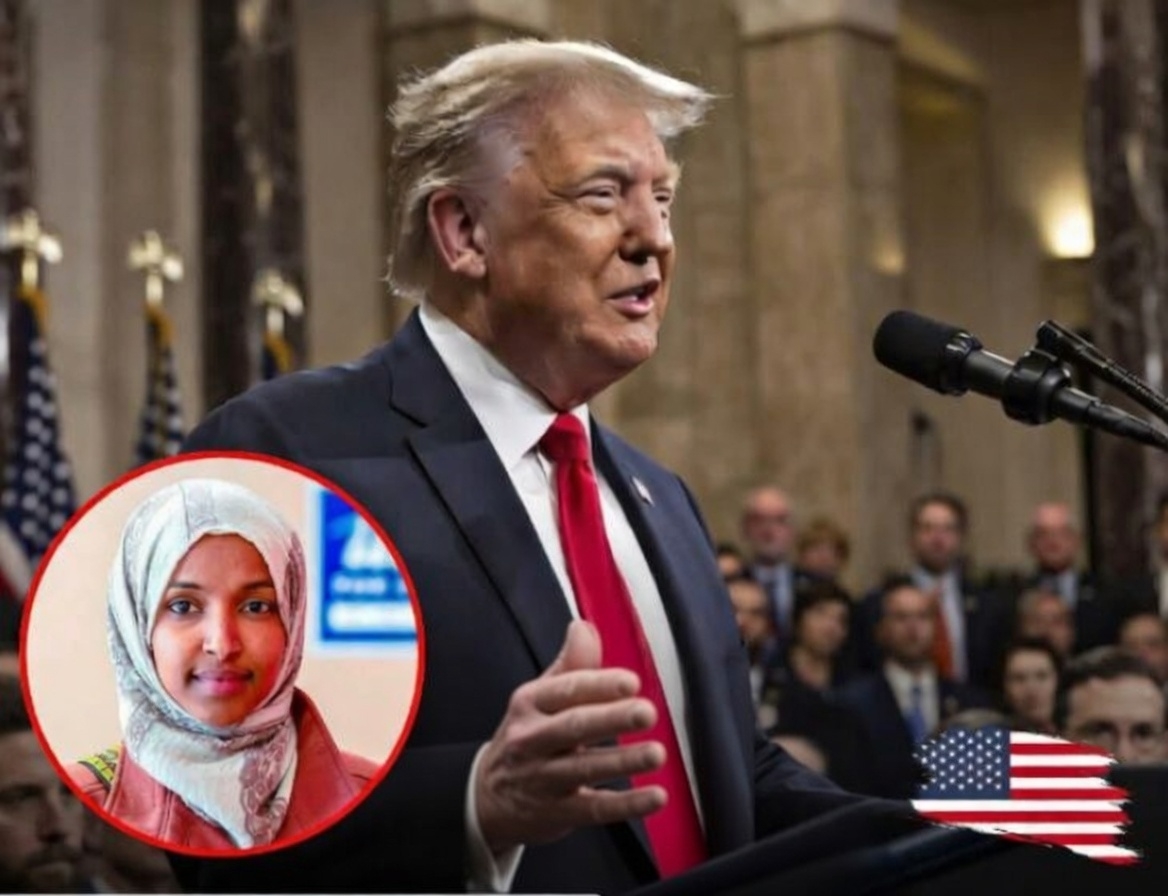
Former President Donald Trump’s recent call for Representative Ilhan Omar’s deportation, following disruptions during a State of the Union address, has ignited a fierce political controversy across the United States. His use of harsh language immediately fueled intense reactions, underscoring the profound political divisions that continue to characterize American society. This incident quickly became a flashpoint, highlighting the deep-seated disagreements over political conduct and the boundaries of acceptable discourse in national arenas.
The controversial statement drew starkly contrasting responses. Supporters of Trump argued that disruptive behavior during significant national addresses disrespects democratic institutions and warrants strong condemnation. Conversely, critics swiftly pointed out that Ilhan Omar is a naturalized U.S. citizen and a duly elected member of Congress, making any call for her deportation legally unfeasible under constitutional law. Legal experts widely affirm that U.S. citizens, whether natural-born or naturalized, are protected from deportation, save for extremely rare cases involving proven fraud during the naturalization process. This legal clarity directly challenges the feasibility and constitutionality of Trump’s remarks.
Beyond the immediate dispute, this controversy spotlights a pervasive issue in contemporary American politics: the escalating use of aggressive rhetoric. In today’s hyper-polarized environment, politically charged statements often transcend policy disagreements, devolving into personal attacks. While freedom of speech protects robust criticism of elected officials, demands involving a citizen’s fundamental right to citizenship and deportation raise serious constitutional questions and significantly intensify partisan divides. Such moments reveal the ongoing tension between passionate political expression and the fundamental limits set by the U.S. Constitution, demonstrating how the political landscape continues to evolve despite clear legal frameworks.