The Patriotism Powder Keg: Senate Clash Ignites National Debate
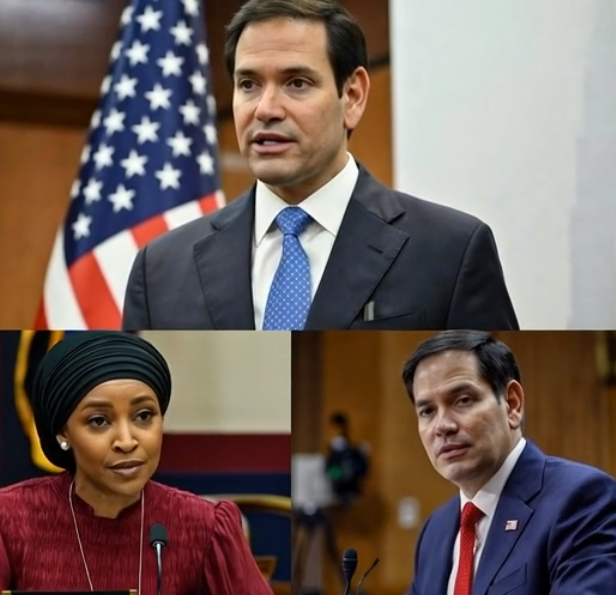
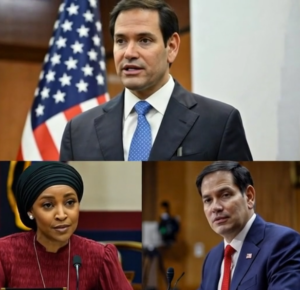
A routine Senate debate dramatically escalated when Senator Marco Rubio declared, “I’m tired of people who keep insulting America.” His visibly restrained yet charged tone instantly transformed the discussion into intense political theater. Rubio sharpened his critique, implicitly aimed at Representative Ilhan Omar, accusing unnamed colleagues of leveraging America’s freedoms for success after fleeing danger, only to then criticize the very system that enabled their rise. He framed their public critiques of U.S. policies and overseas travel as contradictions demanding accountability, not applause.
Gasps reportedly rippled through the chamber as the debate veered into deeply personal territory. Representative Rashida Tlaib loudly objected, labeling the remarks racist and demanding procedural intervention, escalating the moment into a full-blown confrontation. Supporters framed Rubio’s comments as a vital defense of national pride, arguing that criticism often morphs into contempt for America’s foundational values. Critics, however, countered that dissent is not disdain, asserting that holding the nation accountable to its ideals represents an act of devotion. The exchange immediately transcended Capitol Hill, with clips rapidly circulating across social media, turning comment sections into heated battlegrounds over immigration, race, and gratitude.
At its core, the controversy reignited a fundamental national question: Is patriotism defined by unwavering loyalty, or by relentless scrutiny of a nation’s flaws? Rubio’s stance implied that gratitude should temper criticism, especially from those who found refuge and opportunity within American borders. Opponents strongly argued that citizenship is not a transactional contract of silence, but an invitation to actively shape a more just republic. They highlighted America’s rich tradition of dissent, from abolitionists to civil rights leaders, as the crucial engine of progress. This debate also exposed generational divides, with younger Americans often prioritizing accountability and older generations emphasizing stability.
The phrase “love it or leave it,” implicitly echoed in Rubio’s remarks, carried significant historical weight, perceived by some as clarity and by others as exclusion. This viral confrontation rapidly became a cultural flashpoint, blurring the lines between governance and entertainment, amplified by algorithms. The incident’s mobilizing power was quickly seized by political strategists. Ultimately, the controversy transcended individual lawmakers, morphing into a national referendum on who has the right to critique America and on what terms. It forced citizens to confront uncomfortable truths about belonging, gratitude, and dissent, illuminating a deeper struggle over whether patriotism is best expressed through protective pride or persistent critique.