High Stakes: Supreme Court to Tackle Trump’s Birthright Citizenship Challenge
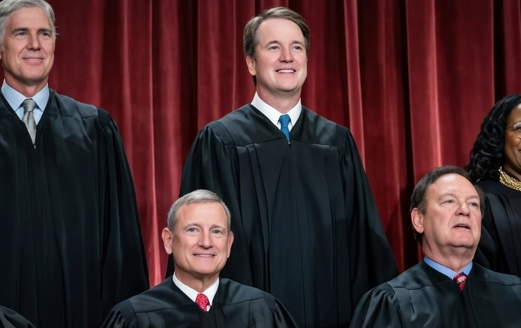
The U.S. Supreme Court has agreed to hear arguments on the constitutionality of President Donald Trump’s executive order seeking to end birthright citizenship, marking one of the most significant immigration cases in decades. Issued by Trump in January, the directive asserts that children born on U.S. soil to noncitizen parents—whether present illegally or temporarily—are not automatically entitled to U.S. citizenship. Trump framed this as a necessary correction to a “century-long misreading” of the 14th Amendment’s Citizenship Clause, claiming the clause has been “grossly distorted” by activist judges.
The administration’s legal position hinges on the interpretation of the 14th Amendment’s phrase “subject to the jurisdiction thereof,” arguing it excludes children of foreign nationals who owe allegiance to another government or are in the U.S. unlawfully. This directly challenges the seminal 1898 Supreme Court ruling in United States v. Wong Kim Ark, which affirmed citizenship for children born in the U.S. to legally residing foreign parents. While Wong Kim Ark has long been the definitive interpretation, Trump’s legal team contends it does not apply to individuals without lawful status.
Despite lower federal courts, including rulings by Judge Leo Sorokin and Judge John Coughenour, having consistently issued injunctions blocking the order’s enforcement, Solicitor General D. John Sauer successfully urged the Supreme Court to review the case. Sauer argued that the prevailing interpretation “erodes national sovereignty and rewards illegal entry.” With arguments anticipated early next year and a decision likely by mid-2026, the potential outcome could be a sweeping change to U.S. citizenship law not seen since Reconstruction, profoundly impacting the children of undocumented immigrants and temporary visitors.