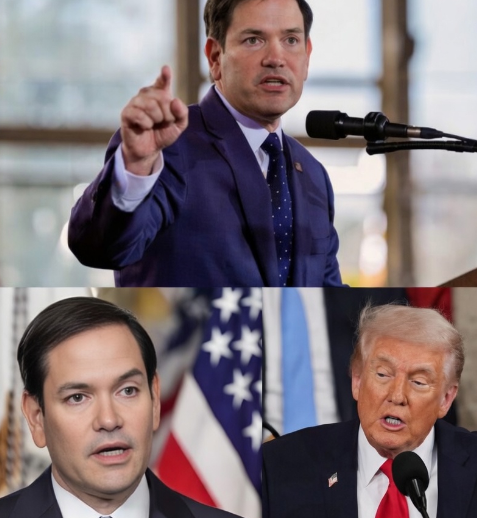
A dramatic television moment involving U.S. Senator Marco Rubio quickly transformed a routine political discussion into a widely debated national event. During a studio segment, Rubio suddenly slammed his hand on the table, instantly changing the tone of the broadcast and capturing viewers’ attention. What began as a typical political conversation escalated into a tense confrontation that soon spread rapidly across social media platforms.
Rubio spoke with visible frustration and intensity, accusing political opponents of distorting reality and avoiding accountability. His criticism was directed primarily toward Ilhan Omar and several of her political allies. According to Rubio, some political leaders manipulate public narratives and pressure institutions to ignore inconvenient facts for ideological purposes. He framed the issue not merely as a disagreement over policy but as a deeper conflict about truth, responsibility, and the integrity of democratic institutions.
Rubio argued that public officials cannot claim moral authority while suppressing scrutiny or avoiding transparency. He emphasized that democracy depends on open accountability, even when the truth may challenge powerful individuals or popular political movements. As his speech continued, the tone became increasingly forceful, and observers in the studio reportedly fell silent as the senator delivered what felt less like television commentary and more like a courtroom-style accusation.
Within minutes of the broadcast, short clips of the exchange began circulating widely on platforms such as X, TikTok, YouTube, and Facebook. The viral footage quickly attracted millions of views and triggered intense debate among political commentators and the public. Supporters praised Rubio’s bluntness and emotional honesty, arguing that moments of raw confrontation can reveal truths that carefully scripted political messaging often hides. They claimed his outburst reflected genuine frustration with political leaders who avoid difficult questions.
Critics, however, offered a very different interpretation. Some argued that Rubio’s performance blurred the line between accountability and political theater, suggesting that dramatic outbursts may generate attention but do little to clarify complex issues. Others warned that fiery rhetoric without careful evidence risks deepening political polarization and undermining respectful democratic dialogue.
Media analysts noted that the incident reflects a broader shift in modern political communication. In today’s digital environment, short and emotionally charged video clips often spread far more quickly than detailed policy discussions. A single moment lasting less than a minute can shape national conversations, especially when shared repeatedly across algorithm-driven platforms.
The Rubio confrontation illustrates how the same event can produce completely different interpretations depending on the audience. Supporters circulated the clip as proof of Rubio’s courage and authenticity, while critics shared it as an example of reckless political rhetoric. This dual narrative highlights the fragmented nature of today’s information landscape, where identical events can lead to sharply divided conclusions.
Ultimately, the exchange became more than a personal dispute between politicians. It sparked a broader discussion about the emotional tone of American politics, the role of viral media in shaping public perception, and the growing tension between passionate political expression and the need for constructive democratic dialogue.